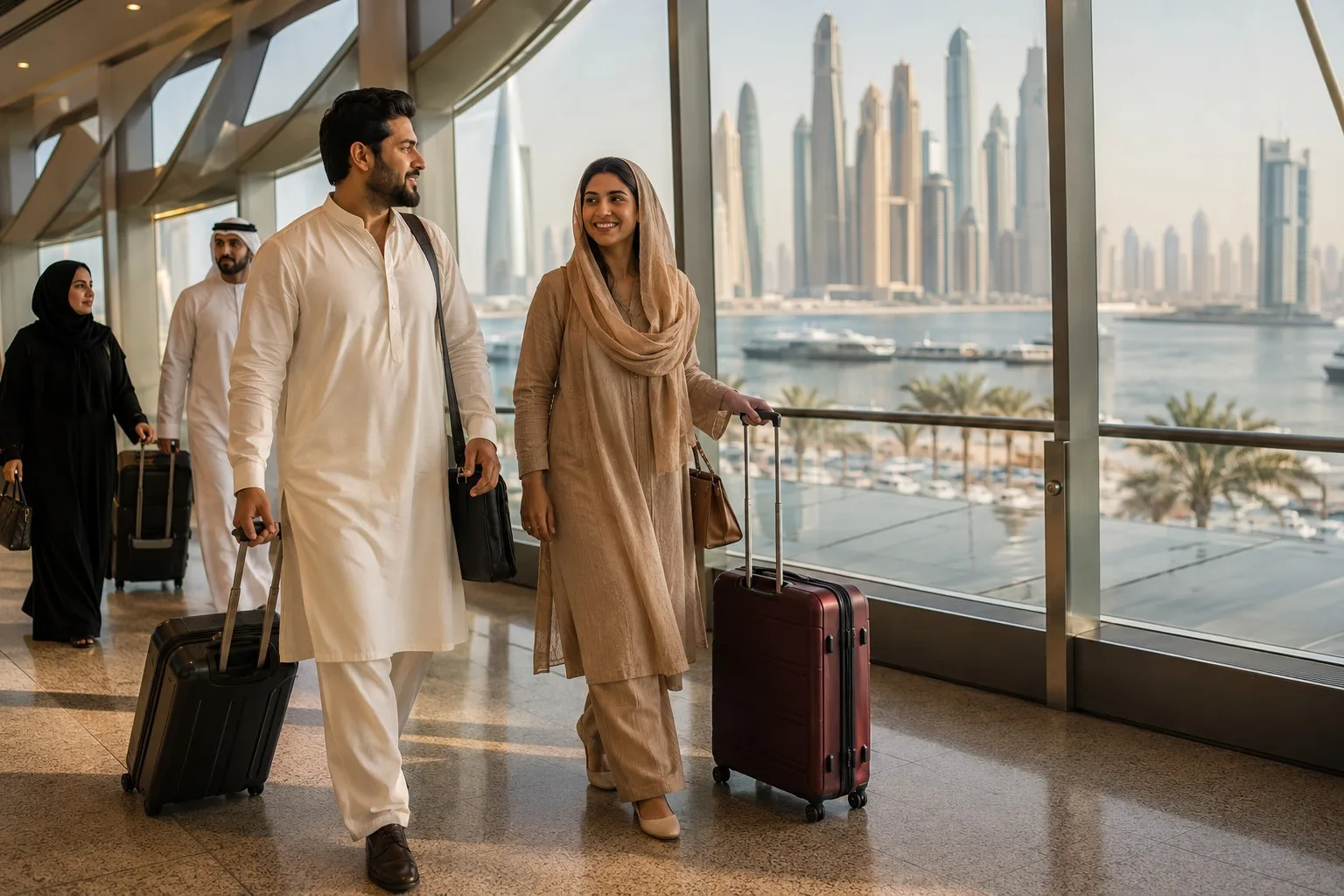
More than 300,000 Pakistanis left the country for overseas work in just the first five months of 2026 — and Saudi Arabia and the UAE are still where most of them are going, even after a rough stretch of regional tensions earlier this year. If you're weighing your own move right now, here's what's actually changed, and what it means for your application.
The Numbers Tell Their Own Story
Between January and May 2026, official emigration data showed Saudi Arabia and the UAE remained the two biggest destinations for Pakistani workers by a wide margin. Around 50,000 people moved to the UAE alone in that window, with tens of thousands more heading to Qatar and Bahrain. What's notable is that this happened during a period of real regional instability — a short but tense conflict between the US and Iran disrupted things for about a month in early spring, and for a while it looked like it might slow hiring down. It didn't. Demand for workers barely dipped, and remittances sent home actually hit record levels over the same period.
The practical takeaway: employer demand in the Gulf hasn't softened because of politics. If you've been holding off applying because of news headlines, the labour market itself hasn't reflected that caution.
Saudi Arabia's New Skill-Tier Visa System
The bigger change for anyone applying to Saudi Arabia this year is on the paperwork side, not the job-market side. Saudi authorities have restructured employment visas into three skill tiers, replacing the older one-size-fits-all approach. In practice, this means the visa category you're issued now depends more explicitly on your role and qualifications — skilled tradespeople, project-based hires, and self-sponsored professionals are no longer processed under the same generic pathway.
If you're applying through a recruitment agency, ask specifically which tier your role falls under before you sign anything — it affects how your Iqama is issued and how straightforward it'll be to renew or switch employers later.
UAE: Easier to Switch Employers Now
The UAE has moved the opposite direction from Saudi Arabia in one important way: labour mobility. Under the newer rules, transferring between employers inside the UAE requires less back-and-forth than it used to — you're not locked into waiting out a long employer-approval process the way you still are in Saudi Arabia and Qatar, where a job change typically means four to eight weeks of employer sign-off before you can move.
If flexibility to change jobs after arrival matters to you, this is a real practical difference between the two markets, not just a paperwork detail.
Which One Should You Choose?
There's no single right answer here — it depends on what you're optimising for:
- Saudi Arabia — larger volume of vacancies right now, especially in construction, facilities, and skilled trades tied to ongoing giga-projects. Better if you want the widest range of openings.
- UAE — better if you value being able to switch jobs without a long approval wait, or you're aiming for self-sponsored/freelance-style visa categories.
- Qatar and Bahrain — smaller volume but steady demand, and often less competition per opening since fewer applicants target them compared to Saudi Arabia and UAE.
Before You Apply — Quick Checklist
- Confirm which Saudi visa skill-tier your offered role falls under, if you're going that route.
- Get your job offer and visa category confirmed in writing before paying any agency fee — legitimate employers and licensed agencies never ask you to pay to "secure" a position.
- Check your target country's current entry and documentation requirements before booking travel, since these have shifted more than once this year.
- If your contract mentions gratuity or end-of-service benefits, know how it's actually calculated before you sign — see our Saudi End-of-Service Calculator or UAE Gratuity Calculator.
Where to Find Current Openings
We list verified, up-to-date vacancies for both markets — browse current Saudi Arabia jobs and UAE jobs on DreamAbroadJobs, or compare more options in our guide on UK vs Canada vs Germany: which country offers the easiest work visa.
Frequently Asked Questions
Is it still safe to go to Saudi Arabia or UAE for work in 2026?
Yes — despite regional tensions earlier in the year, worker movement to both countries continued at record volume, and remittances stayed strong through the same period. Standard travel-safety awareness still applies, but there's no indication employers or authorities have pulled back on hiring.
What is Saudi Arabia's new visa skill-tier system?
Saudi Arabia now classifies employment visas into distinct skill tiers rather than one general category, so the paperwork and process depend more directly on your role and qualifications. Confirm your tier with your employer or agency before applying.
Can I switch employers easily in the UAE?
Yes, more easily than before — recent rule changes reduced the approval friction for transferring between employers inside the UAE, compared to the longer employer-approval wait still required in Saudi Arabia and Qatar.
Which Gulf country has the most job openings right now?
Saudi Arabia currently has the largest volume of vacancies for Pakistani workers, driven largely by ongoing construction and infrastructure projects, followed by the UAE.